Peptide High Quality: Importance Of Third-party Validation
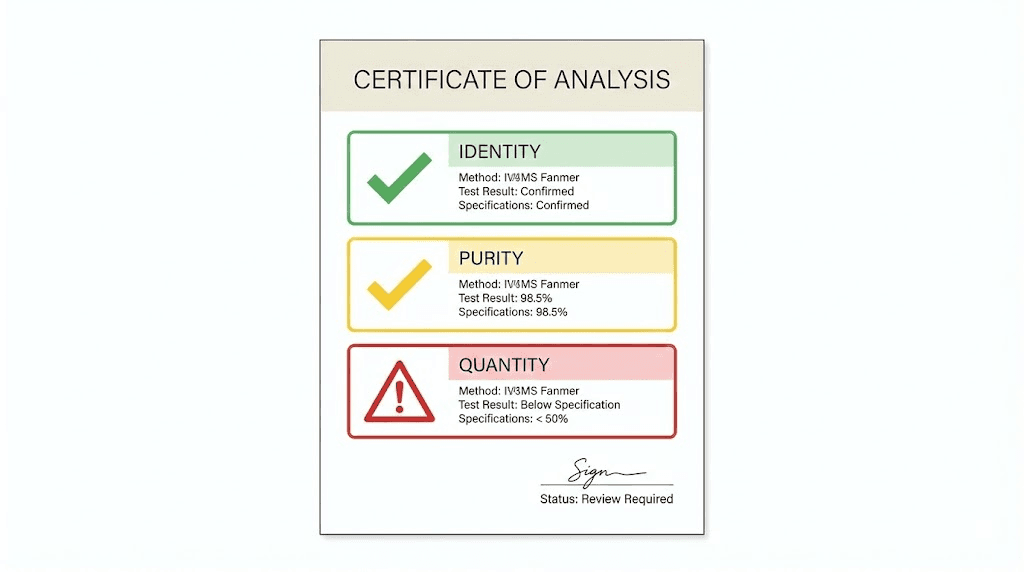
The table below web links common task goals to sensible logical panels and the kind of decisions they aid support. Asparagine and glutamine deposits can undergo deamidation, changing the peptide's cost and hydrophobicity. Deamidation is one factor storage conditions issue, particularly after a peptide has been reconstituted. Every product we lug is lab-tested and confirmed by third-party partners, so researchers recognize exactly what they're collaborating with. Peptides containing methionine or cysteine residues are vulnerable to oxidation. Methionine can be oxidized to methionine sulfoxide; cysteine can develop undesirable disulfide bonds or be oxidized to sulfinic or sulfonic acid derivatives.- The top quality and dependability of a peptide pureness measurement rely on approach parameters and documents high quality.Many peptide vendors and research labs depend on a number of reputable analytical approaches.As long as you get peptides from a relied on source that supplies a total certification of evaluation, you can be positive in the peptide's pureness quality and usage range.
Solutions
Inconsistent fragment size distribution and morphology can influence bioavailability and stability. BOC Sciences is outfitted with tools like DLS, TEM, SEM, etc, to completely assess nanoparticle size, circulation, and microstructure. For us, purity isn't simply a portion-- it's a promise of honesty, consistency, and regard for the scientific research being done.
FDA and the European EMA have established standards mandating comprehensive analysis and quality assurance for peptide items to ensure security and effectivenessr. In the context of pharmaceutical or clinical-grade peptides, research laboratory validation is integral to fulfilling these guidelines. As an example, prior to a peptide medicine can go into human tests, its producer must show the identity, pureness, effectiveness, and safety of the peptide through verified logical approaches. Peptide purity testing information are obligatory in preclinical research studies and must be consisted of in investigational brand-new medication (IND) applications and later on new medicine applications (NDAs).
What Is Research Laboratory Validation And Why Is It Crucial For Peptides?
Lack Of Efficient Approaches For Structural Adjustments And Series Confirmation
Other methods like electrophoresis, capillary electrophoresis (CE), and nuclear magnetic resonance (NMR) can also be utilized to assess peptide framework, charge, and purity, making sure detailed characterization. In COA review, it normally consists of HPLC pureness testing, mass spectrometry identification verification, and batch-specific paperwork revealing the checked lot, technique, results, and day. For peptide purity testing, reverse-phase HPLC is the basic conceptual model. The chromatographic purity is then computed by comparing the location under the main peak with the total location under all integrated tops.We use GC-MS, ICP-MS, and other methods to spot pollutants, making certain product safety and regulative conformity. Peptide sequencing is critical for identifying the precise amino acid sequence of peptides, consisting of adjustments like phosphorylation or acetylation. Sequencing allows scientists to recognize the organic function of the peptide and its interaction with other molecules, helping in the design of useful peptides for varied applications. The peptide sample is liquified in a compatible solvent and loaded right into an autosampler.
Likewise, keep in mind that "research-grade" peptides are indicated for the laboratory bench and include high pureness and identity checks yet are not created as medicines. Constantly check that your peptide includes proper logical data (HPLC chromatogram and MS outcomes) and is labeled for research usage. Armed with this understanding, you can confidently analyze tags like "95% purity, research study quality" and utilize those peptides to drive your experiments without confusion. Knowledge of purity levels will additionally direct you if you ever before require a higher purity peptide for a particularly sensitive assay. In the end, obtaining the purity level right suggests more reliable scientific research-- and that's the best goal for any kind of scientist. With years of logical screening experience and progressed tool platforms, BOC Sciences provides comprehensive peptide top quality testing solutions throughout the whole process from resources to formulas. The dissolved peptide sample is injected into a stream of fluid solvent (the mobile stage) that moves via a tube packed with tiny fragments (the fixed phase). Various particles "stick" to those fragments with various toughness, so they travel with the column at various rates. Subtle differences in raw material Growth Hormone Peptides purity and structure can result in incongruities in the activity of the final product.